
Botox (Botulinum Toxin)
Botox, short for Botulinum toxin, is best known for its cosmetic use in reducing facial wrinkles. However, this procedure has many other applications in dermatology.
What is Botox?
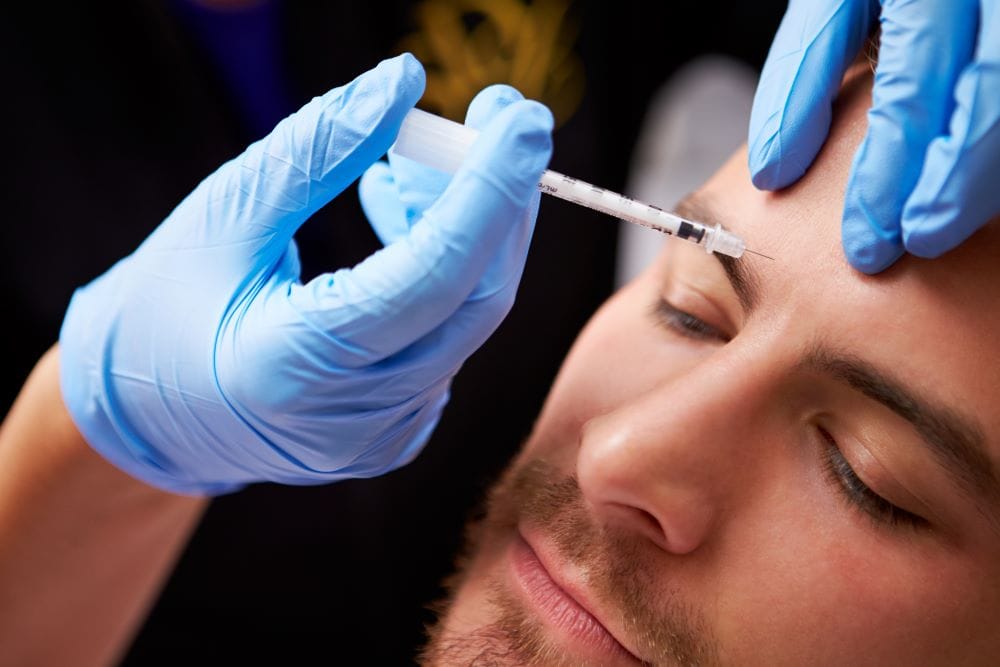
Botulinum toxin is a neurotoxin produced by the bacterium Clostridium botulinum. In its purified form, this substance is used in dermatology and other medical fields. The most common application is the injection into specific facial muscles to relax them, thereby smoothing the skin.
While Botox® is actually a brand name, it has become synonymous with Botulinum toxin in everyday language.
How does Botox work?
Botulinum toxin blocks nerve signals that are responsible for muscle contractions. When injected into certain muscles, it prevents them from contracting as usual, keeping them relaxed. This can effectively smooth out dynamic wrinkles, such as frown lines or crow’s feet around the eyes.
What is Botox used for?
The procedure has numerous cosmetic and therapeutic applications. At Laserdermatology Portugal, we offer a wide range of treatments.
Botox for wrinkle reduction
The most well-known and common use of Botox is for the treatment and prevention of dynamic wrinkles. It is particularly effective in reducing forehead lines, frown lines, and crow’s feet. The effects last for several months, and many patients undergo treatment two to three times a year.
Botox for droopy eyelids
Botox can also be used to treat droopy eyelids when they are caused by muscular issues. After the injection, the eyebrows lift, which indirectly causes the eyelids to rise as well.
However, if the droopy eyelids are due to excess skin or other underlying conditions, other treatments, such as surgery or laser therapy, may be necessary.
Botox for a gummy smile
Another cosmetic application is the treatment of a gummy smile. This occurs when the upper lip lifts excessively while smiling, revealing the upper gumline. Botox injections can soften this effect.
Botox for the lips
In addition to treating a gummy smile, Botox has other uses around the lips. For example, it can relax the circular lip muscle, making the lips appear fuller and helping to reduce dynamic wrinkles around the mouth.
However, if the goal is to add volume or shape the lips, hyaluronic acid is used instead of Botox. You can find more information on this procedure at the link provided.
Treatment of hyperhidrosis
Botox can relieve hyperhidrosis, a condition that causes excessive sweating, by suppressing the nerve signals that trigger sweat gland activity. Patients with hyperhidrosis typically receive treatment every six to eight months.
Botox for migraines and headaches
Botox is also effective in treating migraines and chronic headaches. The injection is administered to specific muscles in the temples, neck, and back of the head. These muscles are often highly tense during migraines. Botox helps relax them, reducing pain. Typically, the treatment needs to be repeated every 3-4 months.
Other uses
Additional potential applications include:
- Jaw tension and teeth grinding
- Muscle spasms (e.g., twitching eyelids)
- Spastic paralysis
- Strabismus and blepharospasm (treated by ophthalmologists)
Does Botox help with hair loss?
Hair loss can be caused or worsened by tense scalp muscles. Chronic stress and long working hours are key contributing factors. When the scalp is constantly tense, blood flow to the hair follicles is reduced, depriving them of nutrients and oxygen. Toxins are also less effectively removed, leading to follicle damage and contributing to hair loss.
Botox injections can relax the scalp muscles, improve circulation, and stop hair loss. Treatment is recommended every six months.
For genetically induced hair loss, we also offer PRP therapy (platelet-rich plasma). A healthy diet rich in vital nutrients and antioxidants is also essential for the success of the treatment.
“Hair Botox”
It’s important to note that the term “hair Botox” is often mistakenly used for intensive hair care treatments, which actually have nothing to do with the medically used Botox. These treatments aim to smooth the hair.
When does botox start working?
The medication is injected directly into the muscle using a very fine needle. The procedure only takes a few minutes, but it usually takes 4 to 5 days before noticeable effects appear. In some cases, the final results may take up to two weeks to become visible.
How long does the effect last?
The effects typically last between three and six months. After this period, the muscles gradually regain their ability to contract. Regular injections every few months are necessary to maintain the effect, although some individuals may require less frequent treatments over time as their muscles weaken.
How often do you need botox?
The recommended interval between treatments varies depending on the patient and factors such as muscle strength, desired results, and the area of the face being treated. As mentioned earlier, treatments are usually repeated every 3 to 6 months.
Skipping regular treatments is not an issue, but during this time, dynamic wrinkles may progress, and previously smoothed wrinkles will gradually become more visible again.
At what age can you start using Botox?
There is no fixed age limit for starting Botox. Whether a person is a candidate depends on their individual health, medical history, and cosmetic goals. For wrinkle prevention, treatments are often recommended for individuals starting in their mid-20s.
Botox for children and seniors
Botulinum toxin is generally not recommended for children, and aesthetic use in minors is uncommon. Seniors can be treated if there are no contraindications. It is important to note that skin sensitivity increases with age. The decision for potential treatment is made on an individual basis, but in most cases, Botox injections are well-tolerated even in older age.
Botox during pregnancy?
Botox is generally not recommended for pregnant or breastfeeding women, as the safety of the medication during these periods has not been well-established. As a precaution, it is advised to delay treatment until after pregnancy and breastfeeding.
Pregnant or breastfeeding women who are considering treatment should consult their doctor to weigh the potential benefits and risks for both themselves and their child.
Are there any other exclusion criteria for treatment?
Certain conditions, such as neuromuscular disorders (e.g., Lambert-Eaton syndrome, myasthenia gravis), allergies to the components of the medication, skin infections at the injection site, bleeding abnormalities, difficulty swallowing or breathing, previous facial surgeries or injections, and certain medications, may affect the safety or efficacy of Botox and could be reasons to exclude someone from treatment. This can only be determined in a personalized consultation with a doctor.
Possible side effects of Botox
Botulinum toxin is generally considered safe when administered by a qualified doctor. However, like any medical procedure, it carries potential risks and side effects.
Possible side effects include:
- Injection site reactions: Common side effects include mild bruising, redness, and swelling at the injection site, which usually resolve on their own within a few hours or days.
- Headaches: Some individuals may experience temporary headaches after a Botox injection.
- Dryness in the mouth or eyes: In very rare cases, temporary dryness of the mouth or eyes may occur.
- Drooping eyelids or eyebrows: In a very small percentage of cases, Botox may cause temporary drooping of the eyelids or eyebrows, which usually resolves within a few weeks. This side effect is generally linked to improper injection technique.
- Allergic reactions: In very rare cases, allergic reactions may occur, manifesting as wheezing, hives, or swelling of the face, lips, tongue, or throat.
In most cases, no side effects or only mild side effects occur, which typically subside completely after a short time.
Serious side effects, such as difficulty breathing or swallowing, muscle weakness, and vision problems, are extremely rare. However, these have become more commonly reported recently (2024), often associated with the administration of unverified products by non-medical professionals.
Such side effects can occur due to improper injection techniques, such as injecting too much medication or injecting into the wrong area. Correct injection techniques and dosing can help prevent these issues. Therefore, it is crucial that only qualified medical professionals, such as dermatologists, plastic surgeons, or specially trained and experienced doctors, administer Botox.
Is Botox painful?
The injection is hardly painful, and most patients do not require anesthesia. However, if desired, a local anesthetic cream can be applied before the injection.
Is there any downtime?
No, generally there is no downtime, and you can return to your normal daily activities immediately after the treatment. It is also considered a typical lunchtime aesthetic procedure. However, you should avoid strenuous activities on the day of the injection and the following day.
Who is allowed to administer Botox?
Botulinum toxin is a medical product and may only be used by physicians. Make sure that the treating doctor has special qualifications (e.g., specialist in dermatology) and can demonstrate substantial knowledge in aesthetic medicine.
How much does a Botox treatment cost?
The cost primarily depends on the amount of medication required, which is determined by the individual purpose of use. Other influencing factors include the doctor’s qualifications and location. Prices at Laserdermatology start at 200 €.
Are there alternatives to Botox?
The effect of botulinum toxin is unique, and there is no comparable alternative. However, in aesthetic dermatology, there are other procedures that can be effectively used for facial rejuvenation and can be excellently combined with Botox.
These include various laser treatments (e.g., CO₂ laser), fillers, microneedling, chemical peels, microdermabrasion, and other procedures.
What is the difference between Botox and fillers?
Botox and fillers are both injectable cosmetic treatments with different mechanisms of action and applications:
- Botox reduces dynamic wrinkles caused by muscle activity by temporarily paralyzing or weakening the affected muscles. It is commonly used for wrinkles between the eyebrows, on the forehead, and around the eyes.
- Fillers are injectable substances that add volume to the skin and smooth out wrinkles and fine lines caused by volume loss—known as static wrinkles—without affecting muscle activity. They are often used for wrinkles around the mouth, cheeks, and chin.
Procedure of Botox treatment at Laserdermatology Portugal
In the preliminary consultation, an individualized treatment plan will be created for you, and all important questions will be discussed. We offer a wide range of therapies, and in many cases, combination therapies like Botox, laser, and fillers are suitable.
You can find tips for the ideal pre- and post-care of your Botox treatment at the previous link. Also, read our other articles on the topic of Botox.
Do you have an interest in a Botox treatment? We are happy to advise you and find the appropriate, individualized treatment plan for you personally.
Related articles
Proper aftercare for Botox treatments
After a Botox treatment, you are immediately ready to resume your social activities. However, there are some aftercare recommendations you should follow to achieve optimal results.